Introduction
Standard and reinforced surgical gowns are related products, but the words alone do not provide a complete purchasing specification. Buyers need to compare the finished construction, reinforcement material and coverage, size, cuffs, closures, packaging and evidence supporting any claimed performance.
Future Tech lists FTG-001 as a Standard Surgical Gown and FTG-002 as a Reinforced Surgical Gown. These models provide clear catalog starting points. Final materials, protection claims, sterile or non-sterile status and project documentation must be confirmed for the selected configuration.
1. What Is a Standard Surgical Gown?
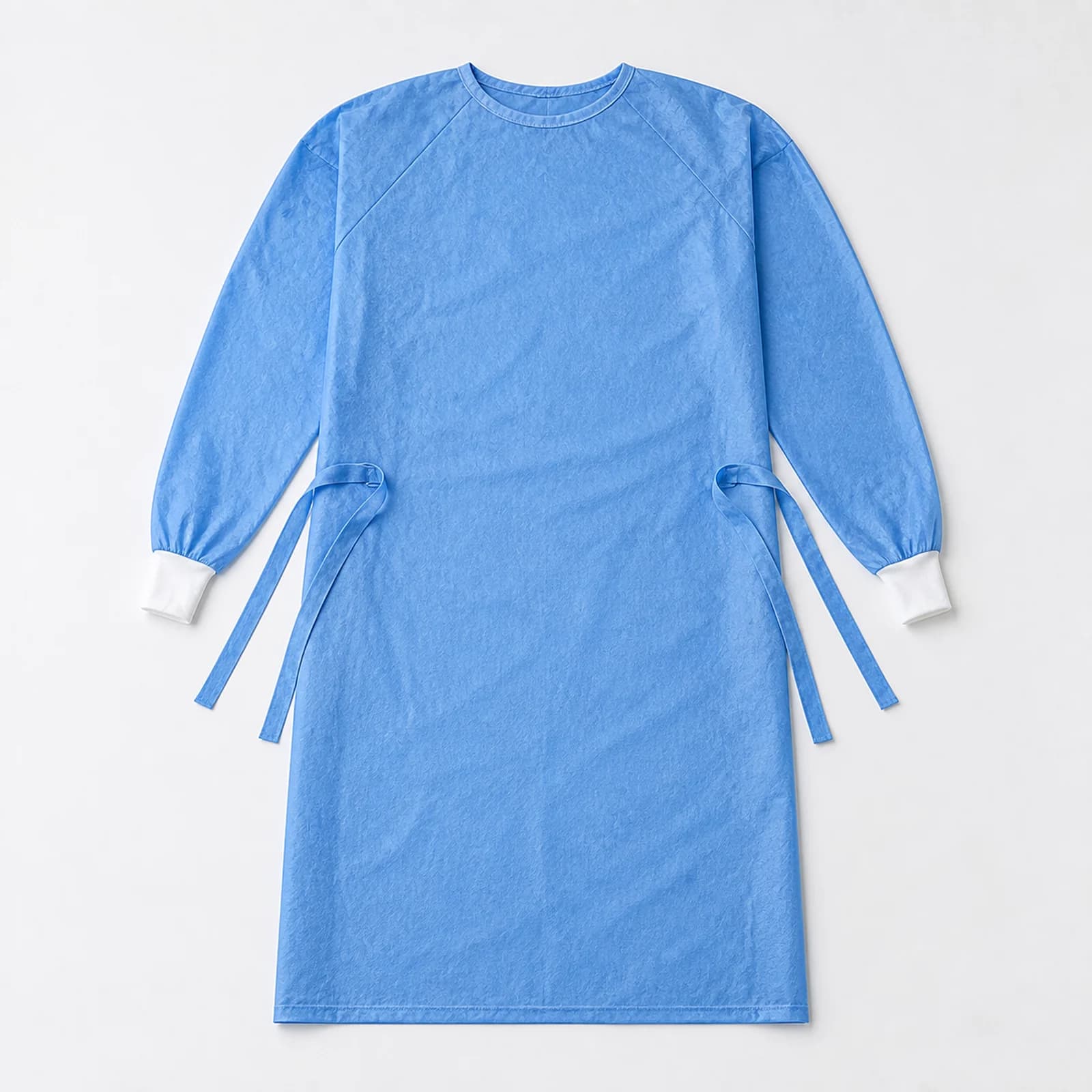
A standard surgical gown uses the selected base construction without the additional reinforcement configuration used to define the reinforced model. The specification still needs to identify material, size, cuff, sleeve, closure, seam and packaging requirements.
Standard does not mean one universal material, barrier level or intended procedure. Buyers should review the actual FTG-001 quotation and supporting documents rather than applying a category-wide assumption.
2. What Is a Reinforced Surgical Gown?
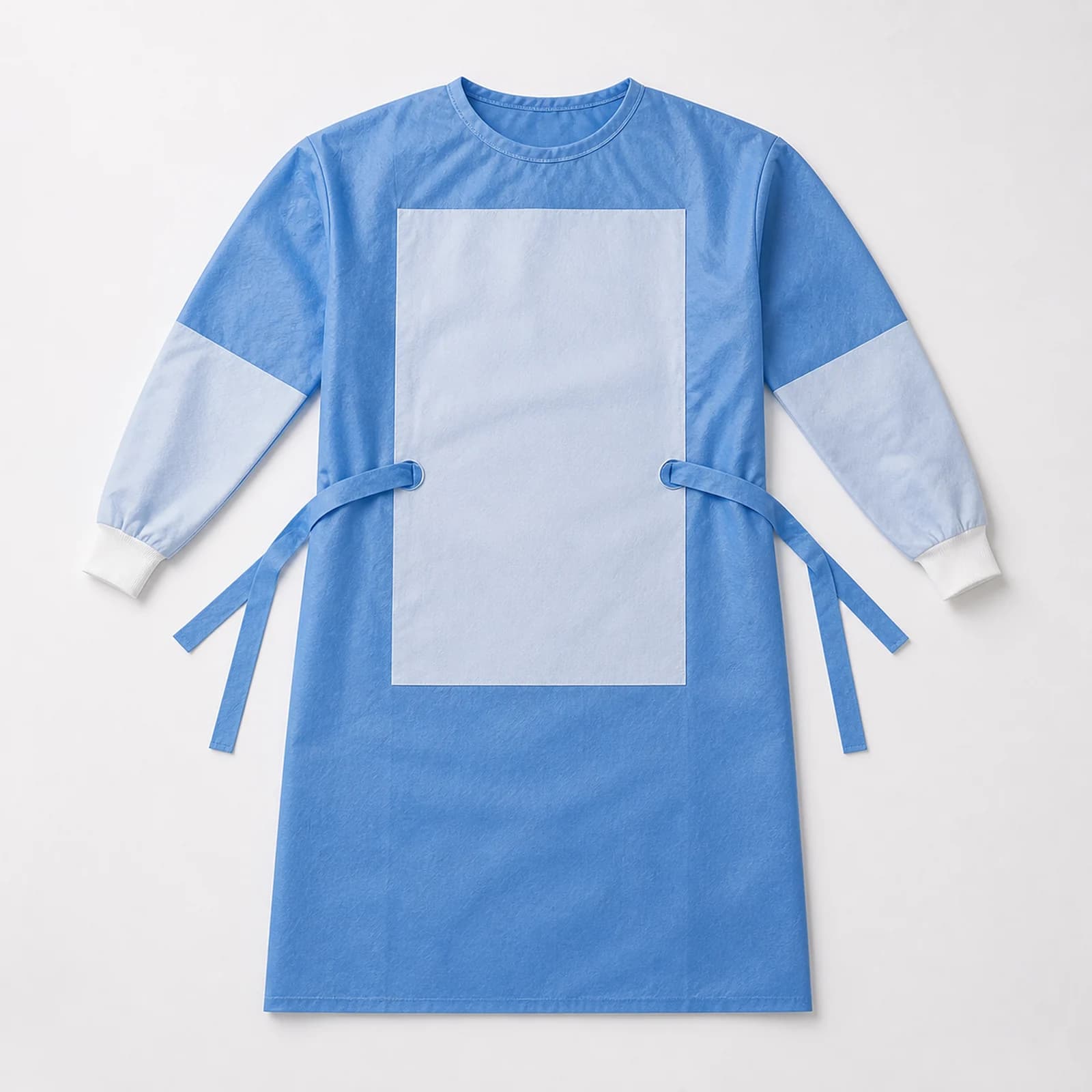
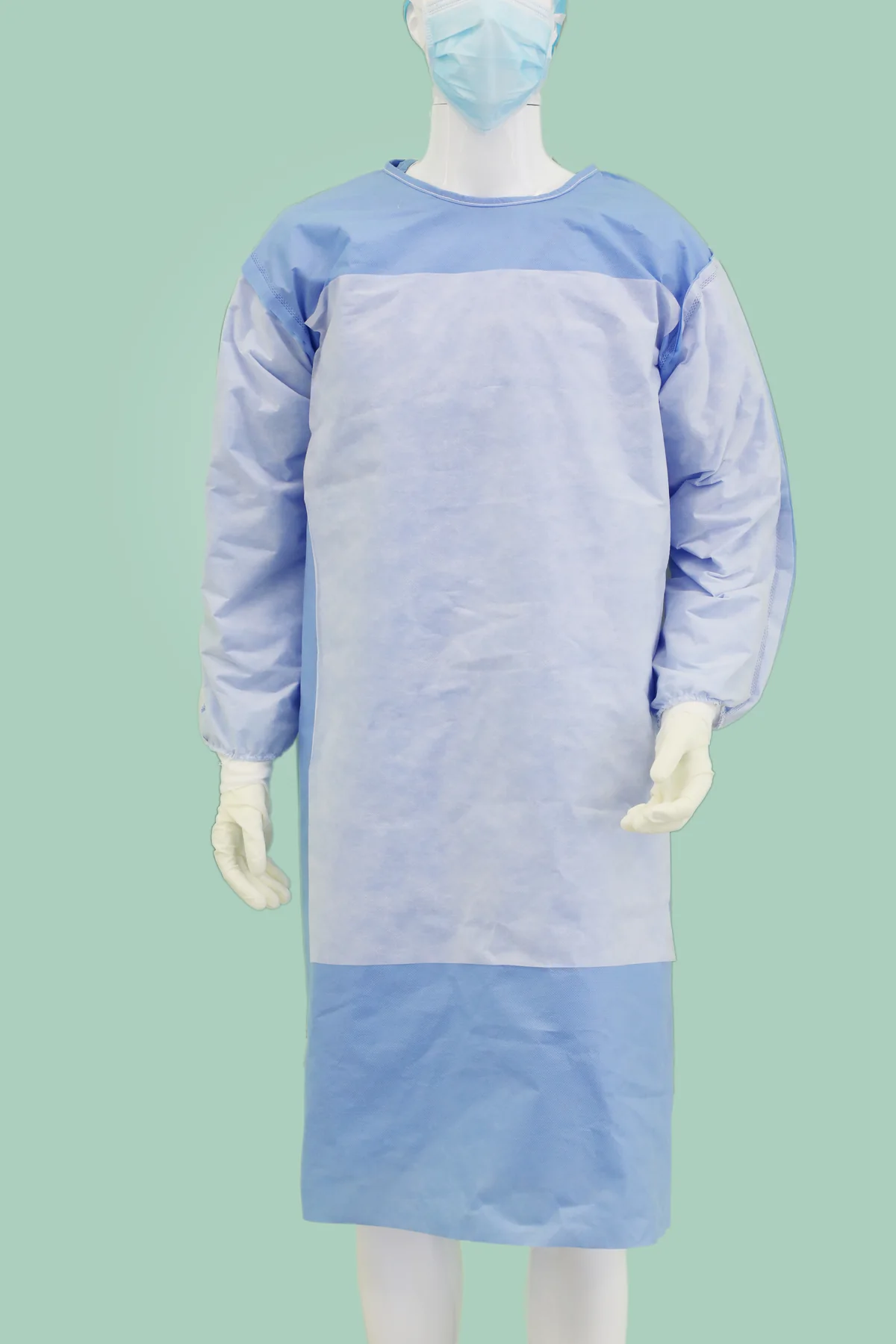
A reinforced surgical gown adds selected reinforcement to the base gown construction. The purchasing file should state the reinforcement material, location, coverage and method of attachment, together with the underlying gown specification.
Reinforced is a construction description, not proof of an AAMI level, fluid-resistance value, EN 13795 classification or sterilization method. Those claims require model-specific evidence.
3. Where Is Reinforcement Typically Added?
Reinforcement is commonly discussed for areas where the buyer requests additional construction, such as the front body or sleeves. The precise area cannot be inferred from the product name. A drawing or approved sample should show the boundaries and orientation.
Ask whether the quoted option is partial or full reinforcement where those terms apply to the supplier's configuration. Record dimensions or reference points so the production team and buyer evaluate the same area.
4. Compare Material and Construction
Compare the base material and reinforcement separately. The project catalog identifies non-woven material options for the gown range and PE or fabric reinforcement choices for FTG-002, but the final selection must be stated on the quotation and approved specification.
Review seams, joins and any transition between reinforced and non-reinforced areas. If the supplier proposes a material change, require a revised specification and assess whether supporting claims or packaging also need review.
5. Compare Reinforced Area and Coverage
Coverage should be described in a way that can be inspected. A phrase such as reinforced front is less useful than a drawing, measured panel or approved reference sample. Confirm whether the coverage is the same across every requested size.
Do not convert coverage into a barrier claim unless the finished model has applicable evidence. Construction drawings and performance documentation answer different purchasing questions and should remain linked to the same product revision.
6. Compare Size and Fit
Check finished gown length, body width, sleeve length, cuff and the method used to take each measurement. Size names such as M, L or XL may not represent identical dimensions between products or manufacturers.
Evaluate FTG-001 and FTG-002 against their own confirmed size specifications. Reinforcement may affect construction, but the buyer should not assume that it automatically changes the size system.
7. Compare Cuffs, Sleeves and Closures
Include cuff type, sleeve construction, neckline and closure details in both quotations. Small differences can make two apparently similar gowns unsuitable for a direct price comparison.
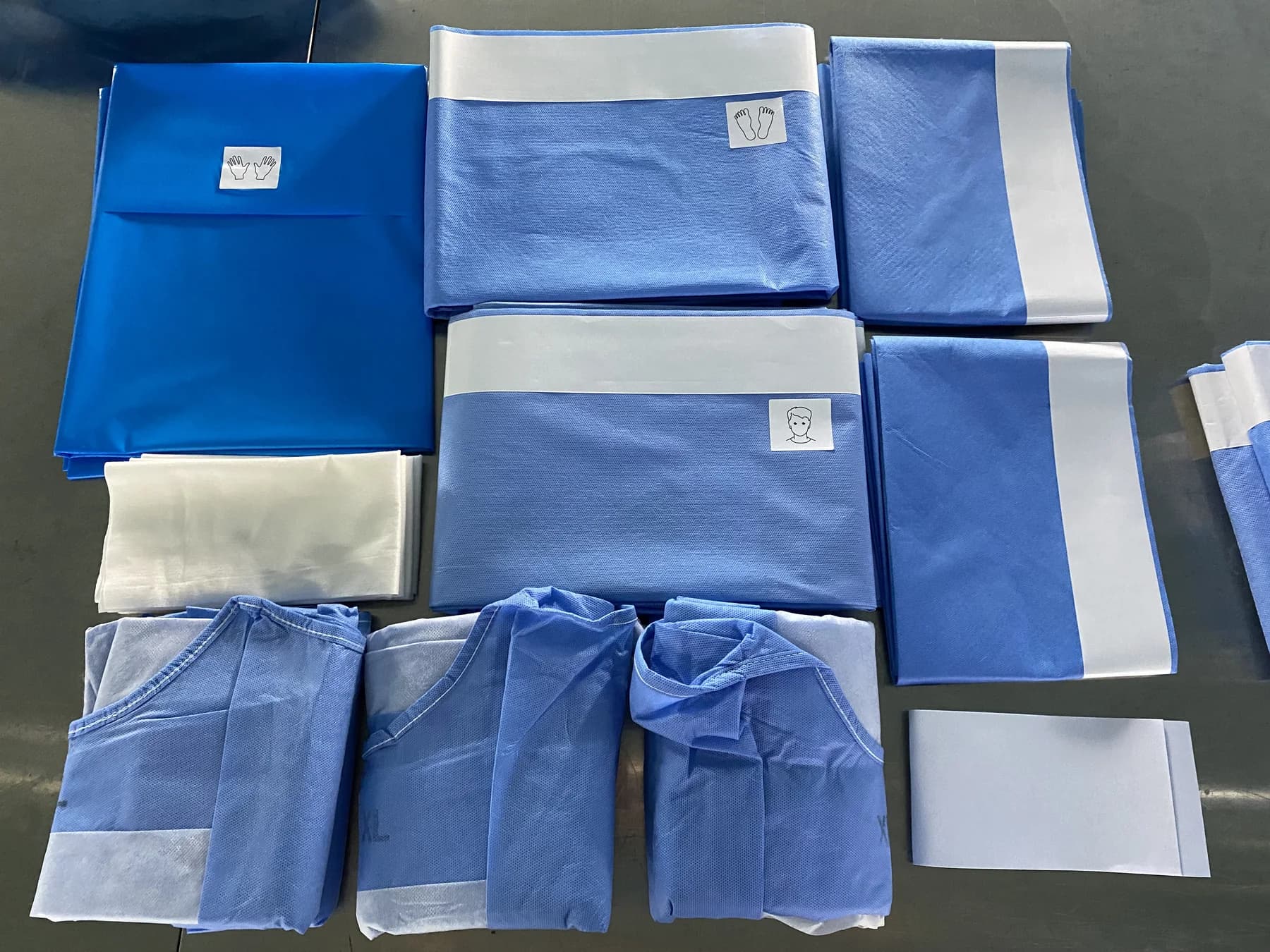
Photographs help identify appearance, but a controlled written specification should define the construction. Confirm any requested tie, hook-and-loop or other closure option for the actual project.
8. Consider the Intended Procedure and Buyer Requirement
The buyer and end user should define the intended procedure, exposure conditions and required product claims. The supplier can then identify which configuration and documentation are available for review.
Avoid treating reinforced as automatically better for every use. The appropriate choice depends on the confirmed requirement and evidence, not on a general hierarchy created by the product names.
9. Confirm Packaging and Sterile or Non-Sterile Requirements Where Applicable
State packaging format, size identification, label language, private-label artwork and carton requirements. If sterile or non-sterile supply is required, identify it explicitly and request the applicable process and documentation.
Do not infer status or sterilization method from color, folded presentation or a photograph. Confirm shelf-life and packaging claims only when supported for the final model.
10. Verify Documentation Before Making Protection Claims
Request documentation that identifies the manufacturer, model or construction, test method, result, scope and validity. A general company certificate should not be treated as proof of every product claim.
Future Tech does not publish an AAMI level for FTG-001 or FTG-002 in the current model data. The final buyer specification should therefore leave that field pending until verified model-specific documentation is available.
11. Standard vs. Reinforced Surgical Gown Comparison Table
| Review point | Standard gown | Reinforced gown |
|---|---|---|
| Catalog reference | FTG-001 | FTG-002 |
| Construction | Base gown construction | Base gown plus confirmed reinforcement |
| Material | Confirm selected gown material | Confirm base and reinforcement materials |
| Coverage | Confirm finished gown design | Define reinforced area and boundaries |
| Sizing | Confirm dimensions and method | Confirm dimensions for reinforced construction |
| Claims | Require model-specific evidence | Require model-specific evidence |
| Packaging | Confirm project requirements | Confirm project requirements |
12. Questions Buyers Should Ask Before Requesting a Quote
- Which exact model and construction are being quoted?
- What are the base and reinforcement materials?
- Where is reinforcement located and how is it measured?
- Which sizes, cuffs, sleeves and closures are available for review?
- Is sterile or non-sterile supply required and documented?
- Which performance claims are supported for the finished model?
- What packaging, labeling and private-label details must be confirmed?
- How will samples and specification revisions be approved?
Conclusion
A useful standard-versus-reinforced comparison examines construction rather than relying on product names. Compare material, reinforcement coverage, dimensions, cuffs, closures, packaging and verified documentation under one controlled purchasing file.
Use FTG-001 and FTG-002 as reference models, then confirm the final configuration and evidence for the individual project before quotation approval or production.