
Introduction
Size codes such as S, M, L and XL are useful labels, but they are not a complete purchasing specification. The dimensions behind those labels may vary by manufacturer, market, pattern and product construction. A buyer who sends only a size name may receive quotations for gowns with different length, width, sleeve or coverage assumptions.
For importers, distributors and private-label buyers, a reliable surgical gown size specification connects each size code to defined measurements and an agreed measurement method. It should also identify the relevant material and construction, because those details can affect how the finished gown is produced and evaluated. The objective is not to give clinical fit advice; it is to remove ambiguity before quotation, sampling and bulk production.
Why Surgical Gown Sizing Matters in Procurement
Sizing affects whether the quoted product matches the buyer's expected coverage, movement and fit requirements. It also affects repeat-order consistency: if one order uses a supplier's L and the next uses only a generic L, the same label may not describe the same dimensions.
A controlled size specification gives purchasing, product review and production teams a common reference. It supports clearer sample comments, makes supplier comparisons more useful and helps prevent a size change from being hidden inside a material or construction revision. Buyers should define acceptance criteria appropriate to their project and confirm them with the supplier before approval.
Do Surgical Gown Sizes Follow One Universal Size Chart?
Buyers should not assume there is one universal surgical gown size chart used by every manufacturer. A designation such as XL can represent different finished measurements depending on the pattern, intended market and measurement method. A catalog range may also use combined or market-specific codes.
Request the manufacturer's actual dimensional specification for the quoted model. Confirm whether dimensions refer to a finished garment, a flat measurement or another defined method, and identify the measurement points. When comparing suppliers, normalize the information into the same units and fields instead of comparing the size names alone.
Key Measurements Buyers Should Confirm
The relevant fields depend on the gown design and buyer requirement. The table below is a procurement checklist, not a universal product standard. Use the fields that apply to the selected construction and confirm how each measurement is taken.
| Measurement | What to confirm | Why it matters |
|---|---|---|
| Gown length | Measurement points, unit and finished dimension | Defines the expected vertical coverage |
| Chest / body width | Flat width or circumference method and location | Prevents different width methods from being compared |
| Sleeve length | Start and end points, cuff included or excluded | Clarifies the finished sleeve specification |
| Cuff configuration | Cuff type, dimensions and attachment where applicable | Links the size review to the actual construction |
| Overall coverage | Front, back and overlap expectations where required | Aligns the pattern with the buyer's stated requirement |
| Size range | All requested codes and dimensions | Ensures the quotation covers the full purchasing range |
How Should Buyers Compare Size Charts from Different Suppliers?
Create a side-by-side table using actual measurements. Convert units where necessary, keep the measurement method visible and flag blank fields rather than filling them with assumptions. If one supplier measures sleeve length from the neck and another from the shoulder, the numbers are not directly comparable until the method is aligned.
Compare the complete size range, not only the most common code. Review whether changes between adjacent sizes are consistent and whether the supplier can identify tolerances where applicable. If a reference gown is being used, record how it was measured and whether it represents the approved construction.
- Use one unit system across all quotations
- Record the measurement point for every dimension
- Separate size code from finished measurement
- Identify any tolerance proposed by the supplier
- Compare the same material and construction
- Keep the approved chart under revision control
Standard and Reinforced Gowns: Does Sizing Change?
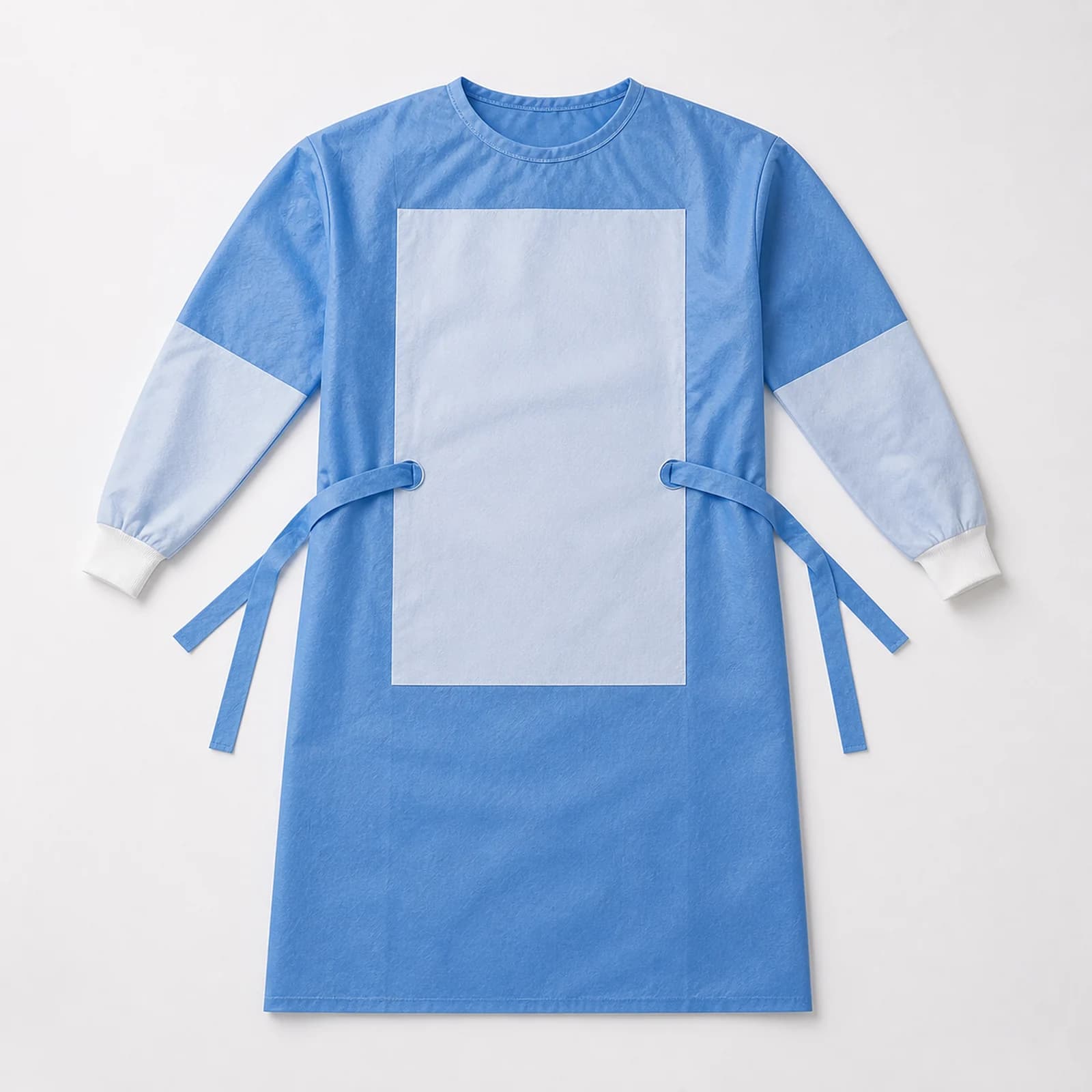
Standard and reinforced gowns should still be reviewed against their own confirmed finished specification. Reinforcement material, coverage and assembly may affect construction details, but a buyer should not assume that every reinforced gown uses a different size system or that a standard gown chart automatically applies.
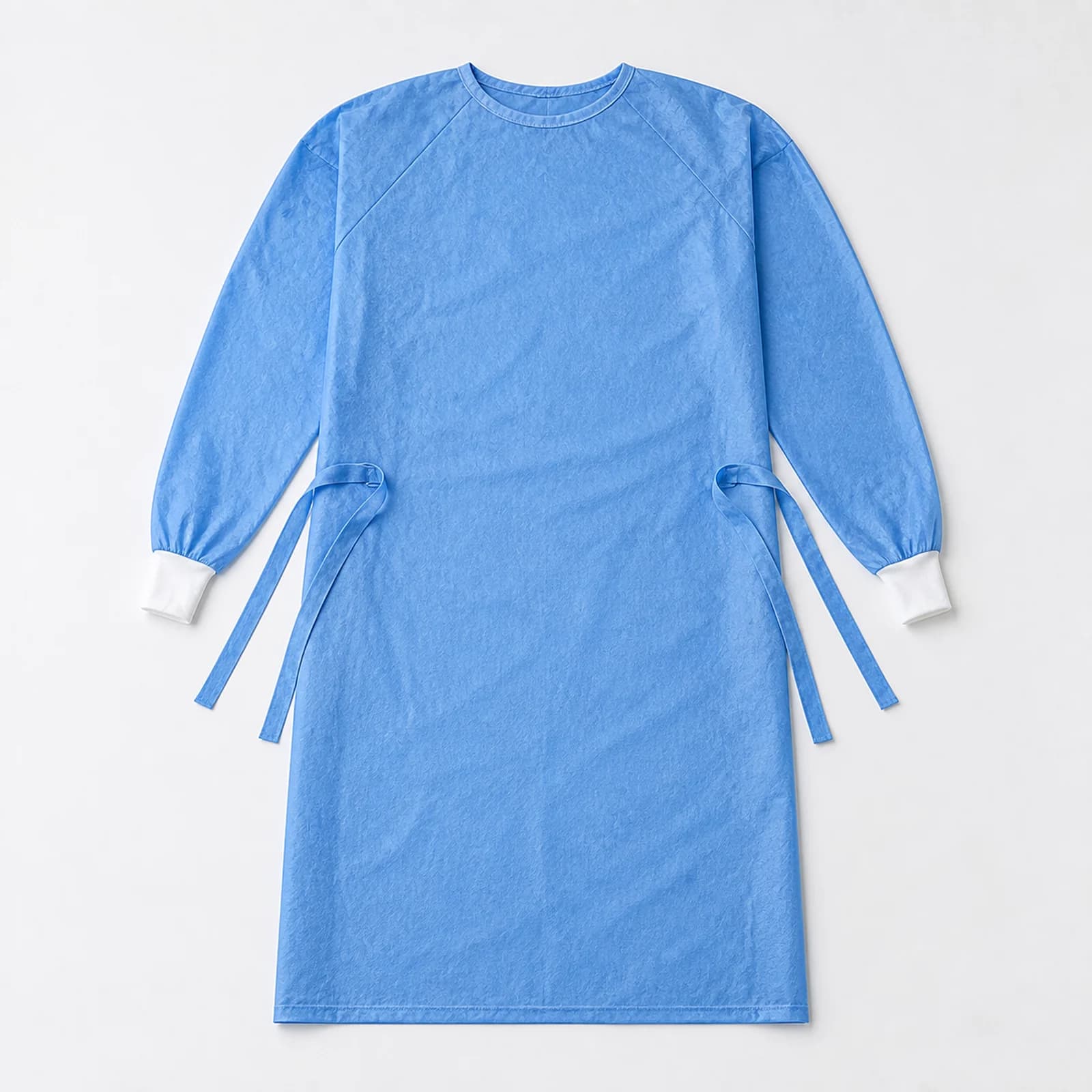
Future Tech lists FTG-001 as a Standard Surgical Gown and FTG-002 as a Reinforced Surgical Gown. The published catalog does not provide a universal size chart that should be applied without confirmation. Review the model, material, reinforcement option where applicable and size specification together.
What Should Buyers Include in a Surgical Gown Size Specification?
A useful file combines size and construction information so the dimensions cannot be separated from the quoted product. Give every revision a date or code and state which version applies to the quotation, sample and order.
- Size code for every requested option
- Gown length and measurement method
- Body or chest width and measurement method
- Sleeve length and measurement points
- Cuff type and relevant dimensions
- Material and standard or reinforced construction
- Tolerance where applicable and agreed
- Packaging requirements by size
- Expected quantity or size ratio
- Reference drawing, chart or approved sample
Should Buyers Request Samples Before Bulk Production?
For a new specification or private-label project, sample evaluation can help the buyer compare dimensions, construction and packaging with the written requirement. The sample should be identified by model and revision so comments can be traced to the correct version.
Measure the sample using the same method defined in the size chart. Record deviations and update the controlled specification before approval. Sample availability, preparation and commercial terms depend on the project and should be confirmed in the quotation; this guide does not state a fixed sample fee or lead time.
Common Sizing Mistakes in Surgical Gown Procurement
- Specifying only S, M, L or XL without dimensions
- Assuming every supplier uses the same size chart
- Comparing measurements taken from different points
- Leaving units or tolerance requirements unclear
- Approving a sample without recording its size revision
- Changing material or construction without reviewing the finished dimensions
- Changing the size chart after packaging artwork is approved
Surgical Gown Sizing Checklist for RFQs
Before sending the RFQ, check that the supplier can understand the requested size range without relying on a photograph or generic label.
- Required size codes and quantity split
- Actual measurements for each size
- Measurement diagram or written method
- Unit of measurement
- Material and construction for the quoted model
- Cuff, sleeve and closure details
- Tolerance requirement where applicable
- Packaging and label treatment by size
- Destination market and required documentation
- Sample and final-approval process
Keep the Approved Size Record Consistent
Once the buyer accepts the size range, keep the approved chart with the model specification, sample record and artwork revision. The same size code should appear consistently on the quotation, packaging proof, purchase order and inspection reference. If a measurement changes, issue a new revision instead of replacing the old file without explanation.
For repeat orders, ask whether the approved pattern, material and construction remain unchanged. If the supplier proposes a change, review whether it affects finished measurements or the way the gown is measured. A short revision history helps procurement teams distinguish an intentional update from an uncontrolled variation.
Conclusion
Clear dimensional specifications reduce ambiguity before quotation, sampling and production. Buyers should compare actual gown length, width, sleeve and construction details rather than treating a familiar size code as proof of equivalence.
Start with the closest catalog model, provide the required size chart and identify any fields that still need technical review. The final dimensions, tolerances and packaging treatment should be confirmed for the selected project before production.