Introduction
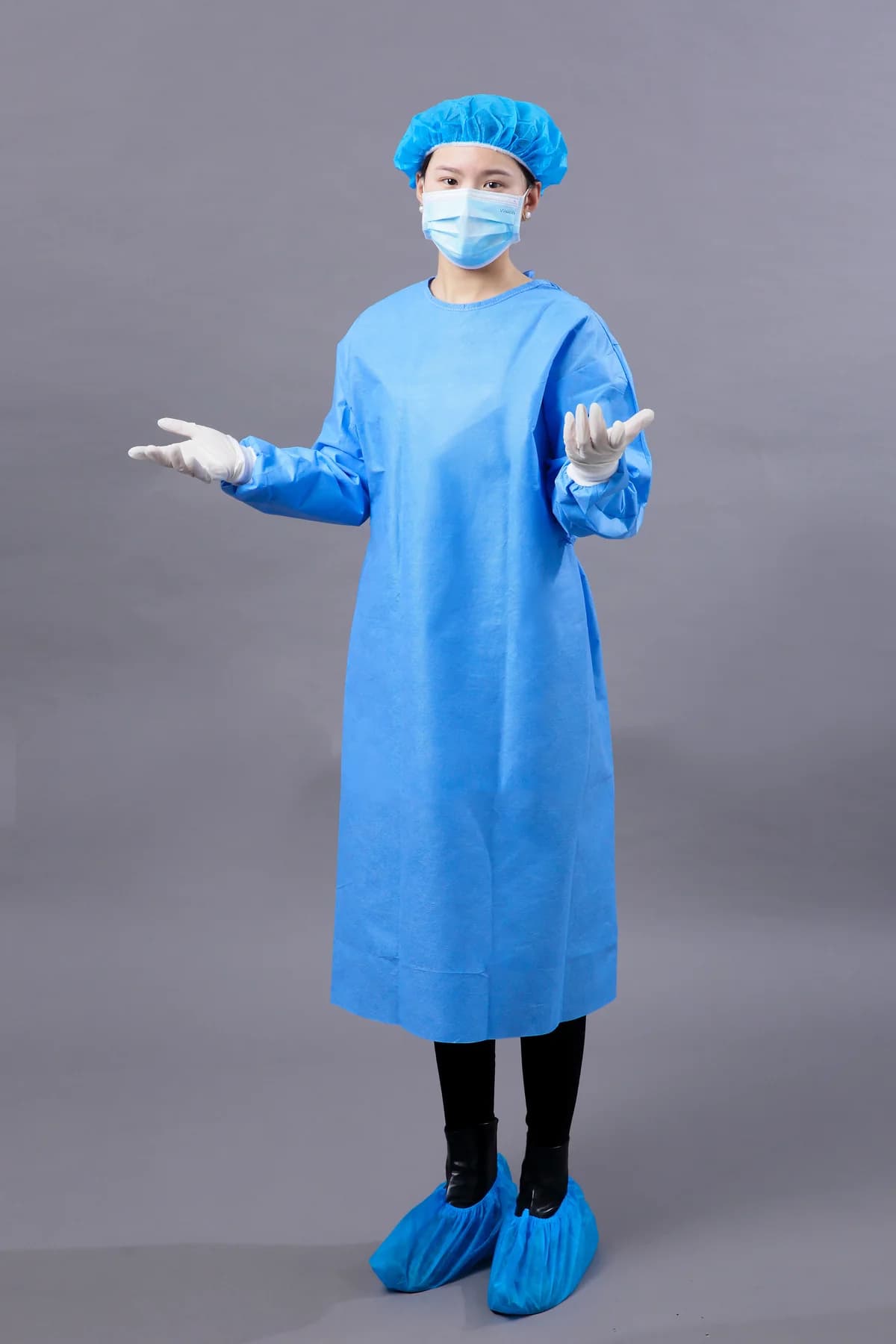
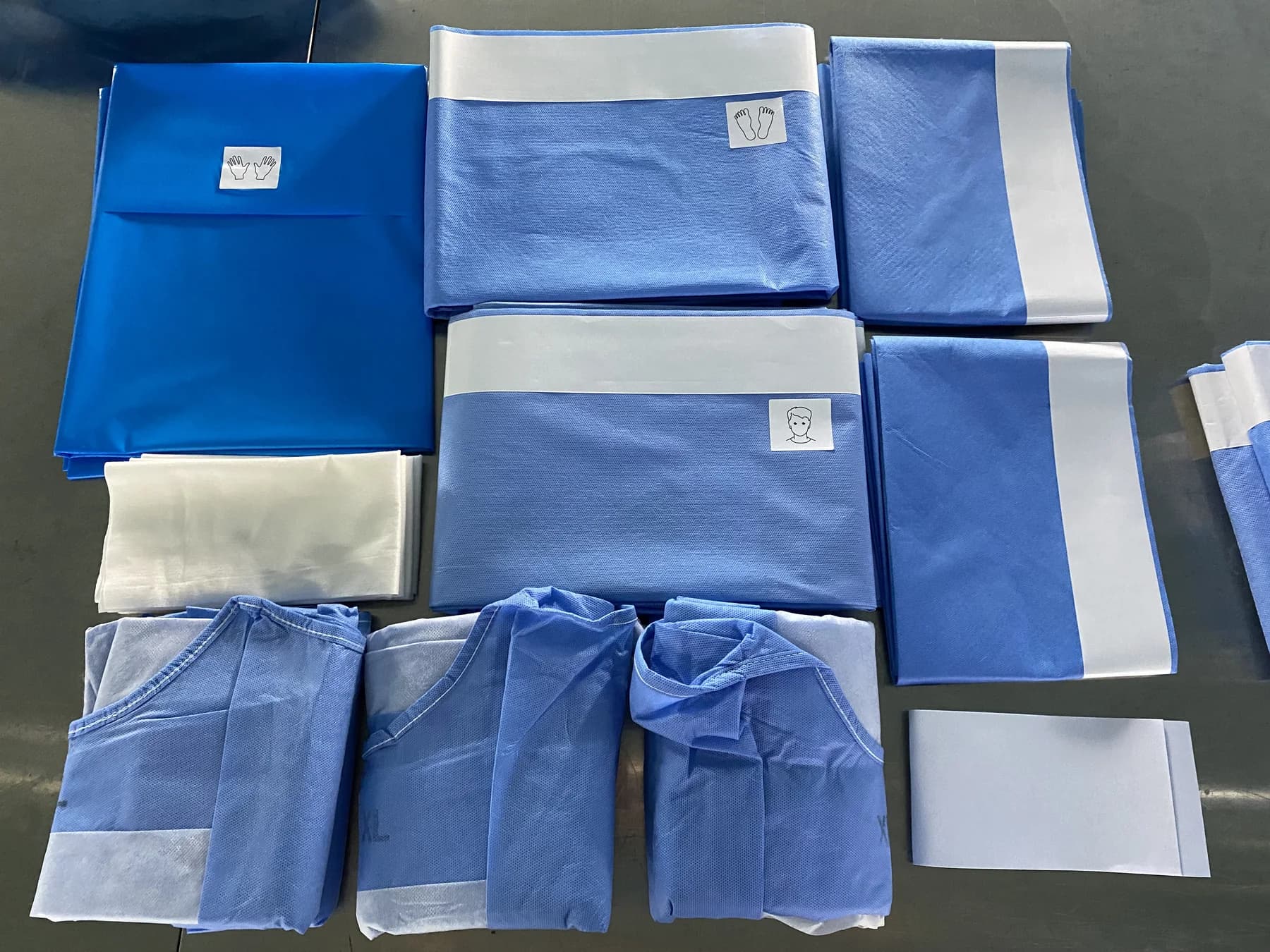
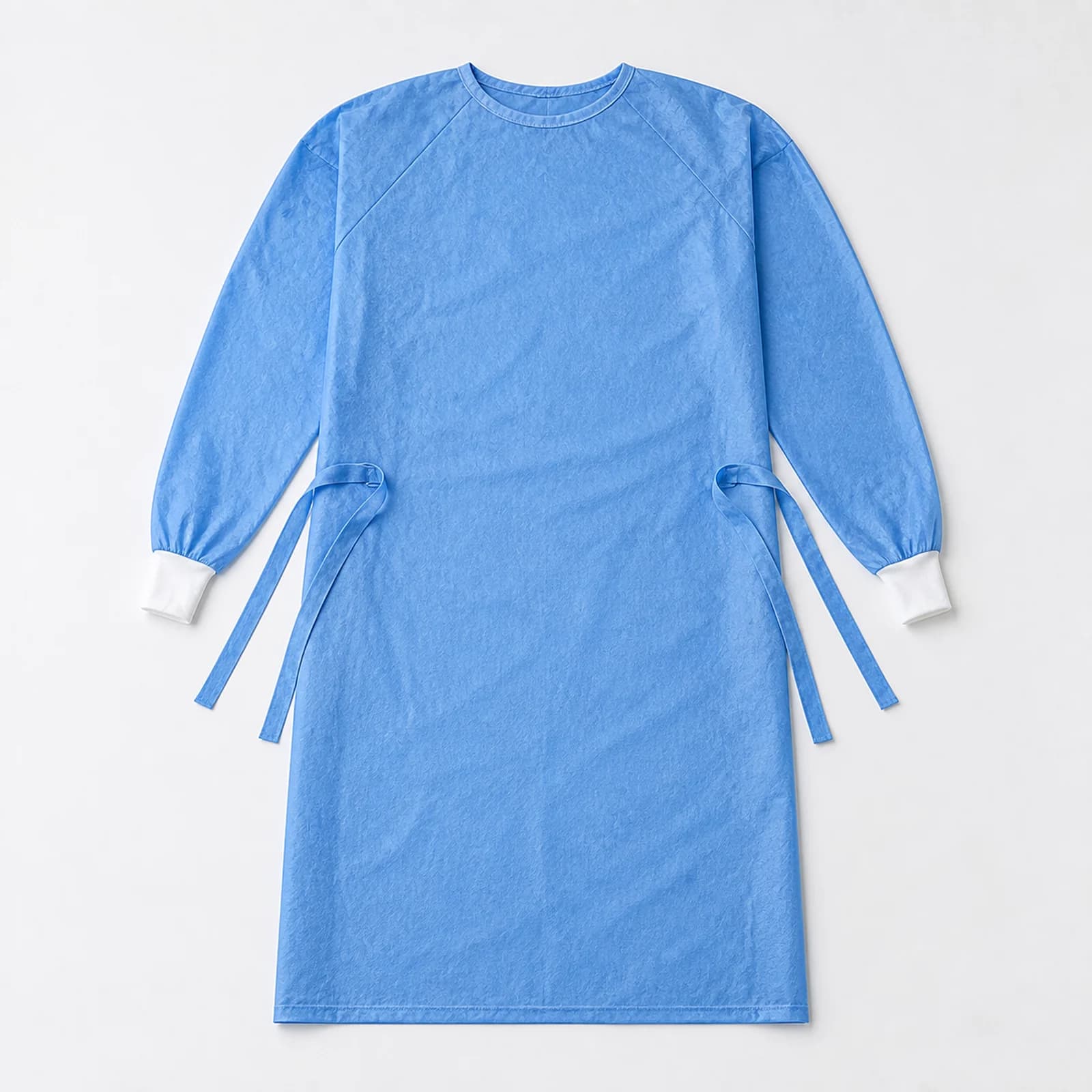
Material acronyms are common in surgical gown quotations, but they are often compared without enough context. SMS, SMMS and SSMMS describe non-woven construction families, while reinforced refers to an additional construction feature or panel rather than a single base material.
A useful B2B comparison must identify the complete finished-product specification. Material name alone does not establish barrier classification, comfort, strength, sterility or suitability for a particular procedure.
SMS and SMMS Material Structure
SMS is commonly used as shorthand for spunbond–meltblown–spunbond construction. SMMS adds another meltblown layer within the named structure. The Future Tech catalog lists SMS, SMMS and SSMMS among possible non-woven material choices for FTG-001 and FTG-002.
The catalog does not provide model-specific basis weight, layer performance or test results. Buyers should therefore request the exact quoted material specification and supporting evidence instead of assuming that more letters automatically mean a particular protection level.
| Term | What it identifies | Protection conclusion | Buyer consideration |
|---|---|---|---|
| SMS | A named non-woven construction family | Cannot be determined from acronym alone | Confirm finished-gown specification and evidence |
| SMMS | A named multilayer non-woven construction family | Cannot be determined from acronym alone | Confirm exact quoted material and finished-product testing |
| Reinforced gown | A gown with added PE or fabric reinforcement in catalog-listed options | Depends on finished construction and verified claims | Confirm reinforcement material, coverage and model documentation |
What Reinforcement Changes
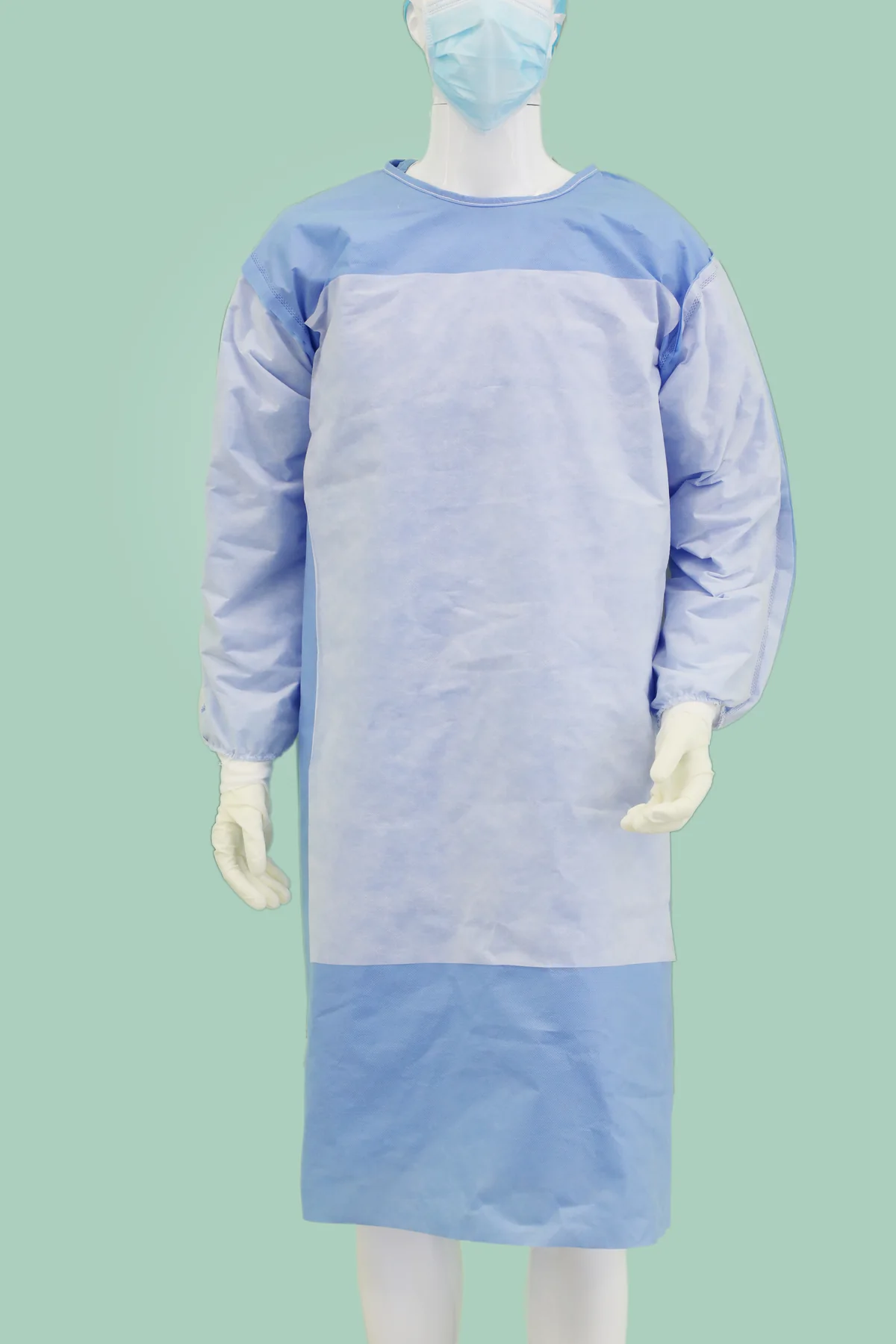
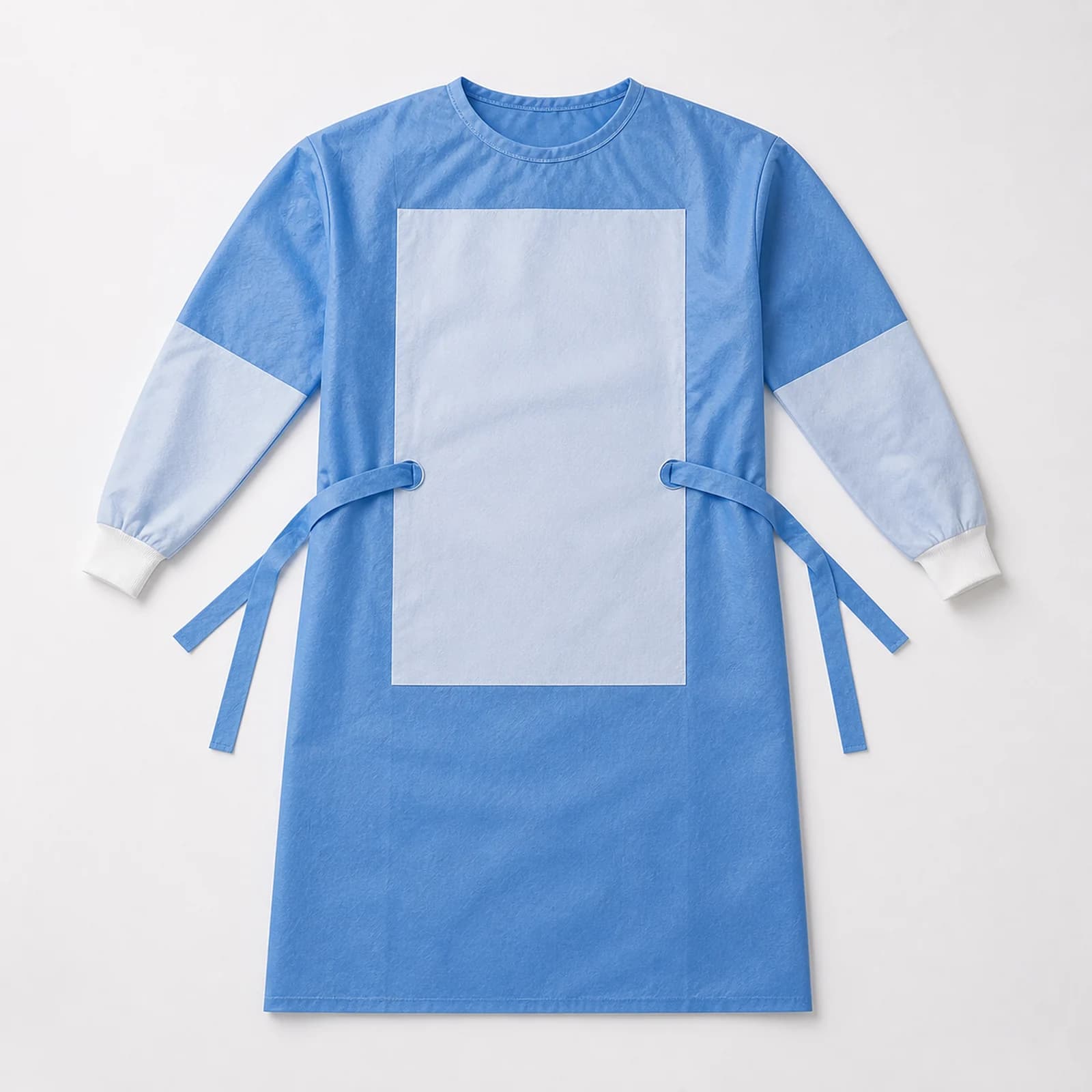
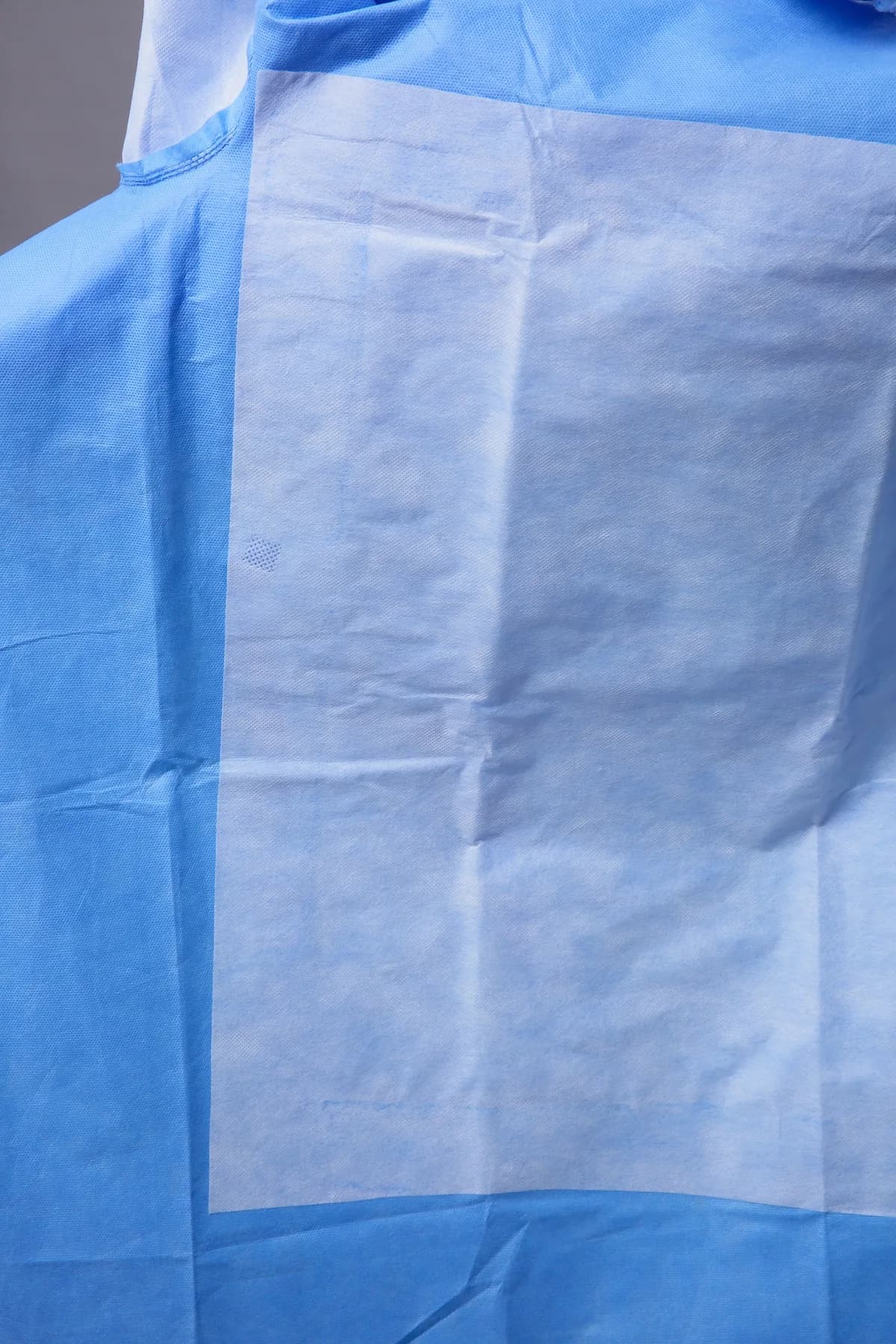
Reinforcement can be added to selected areas of a gown using a material such as PE or fabric. The FTG-002 catalog data lists half or full reinforcement choices. This helps buyers define construction, but it does not independently prove an AAMI level or a particular clinical use.
During quotation review, record whether reinforcement is required, where it is placed, what material is used and how it is joined to the base gown. These details should remain consistent between the approved sample and production specification.
Comfort and Use Considerations
Comfort is influenced by more than the material acronym. Fit, sizing, sleeve construction, cuff, closure, seam construction, reinforcement coverage and the duration and environment of use can all affect the wearer’s experience.
Because the project catalog does not include comparative comfort test data, no SMS-versus-SMMS comfort ranking is stated here. Buyers should use documented specifications and controlled sample evaluation for the intended use environment.
Material Selection Checklist
- Exact base material and construction designation
- Finished-gown barrier claim and supporting evidence
- Basis weight or other agreed material specification
- Reinforcement material and coverage
- Seam, cuff, sleeve and neck-closure construction
- Size range and measurement tolerance
- Packaging, labeling and sterility documentation where applicable
- Approved sample and change-control process
Next Step for Buyers
Start by defining the required finished-product performance and destination-market documentation. Then compare SMS, SMMS or reinforced options that can be supplied under the same written evaluation framework.