Introduction
A custom surgical pack is normally developed around a defined procedure, the components required for that procedure, quantities per pack, dimensions, materials, packaging and the buyer’s market requirements. It is not simply a standard pack with a different label. The purchasing file needs to explain what should be inside the pack and how the finished configuration will be reviewed.
For medical importers, distributors, private-label brands and healthcare procurement teams, a structured request reduces repeated clarification. It also makes quotations easier to compare because each supplier is responding to the same component list and approval criteria. The steps below describe a buyer-led process; final feasibility remains subject to technical review and confirmation before production.
1. Start with the Intended Procedure
Begin by identifying the procedure type and the environment in which the pack will be used. A hospital may provide an existing pack list, a distributor may work from a tender specification, and a private-label buyer may begin with a reference model from an established product range. These are different starting points, but each should lead to a written use context.
Do not begin with carton design or branding. First confirm the procedure, the intended users, any hospital or distributor requirement, and whether an existing reference pack is available. The procedure context helps the supplier understand why particular drapes, gowns, covers or accessories appear in the requested list without making clinical decisions on the buyer’s behalf.
2. Prepare a Detailed Component List
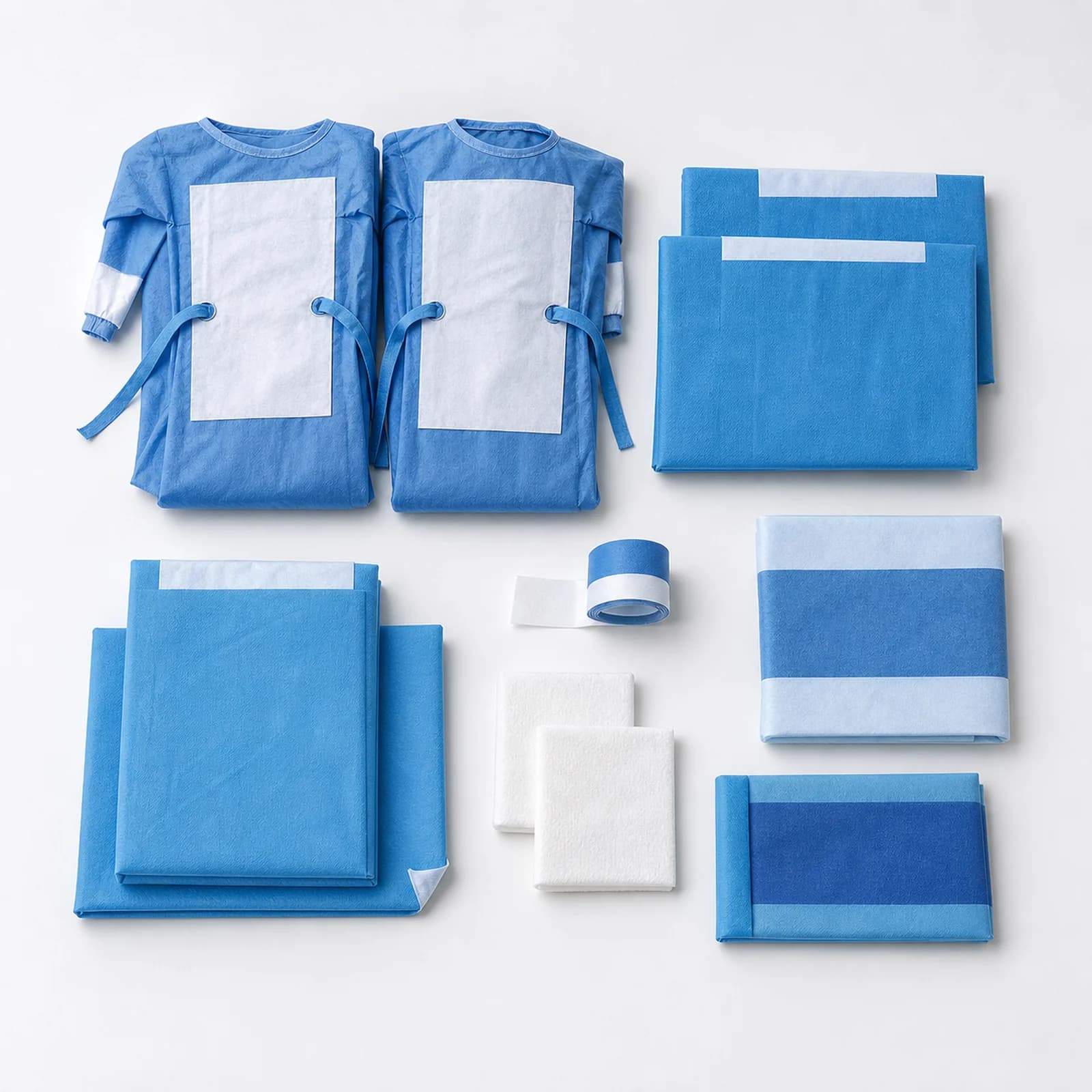
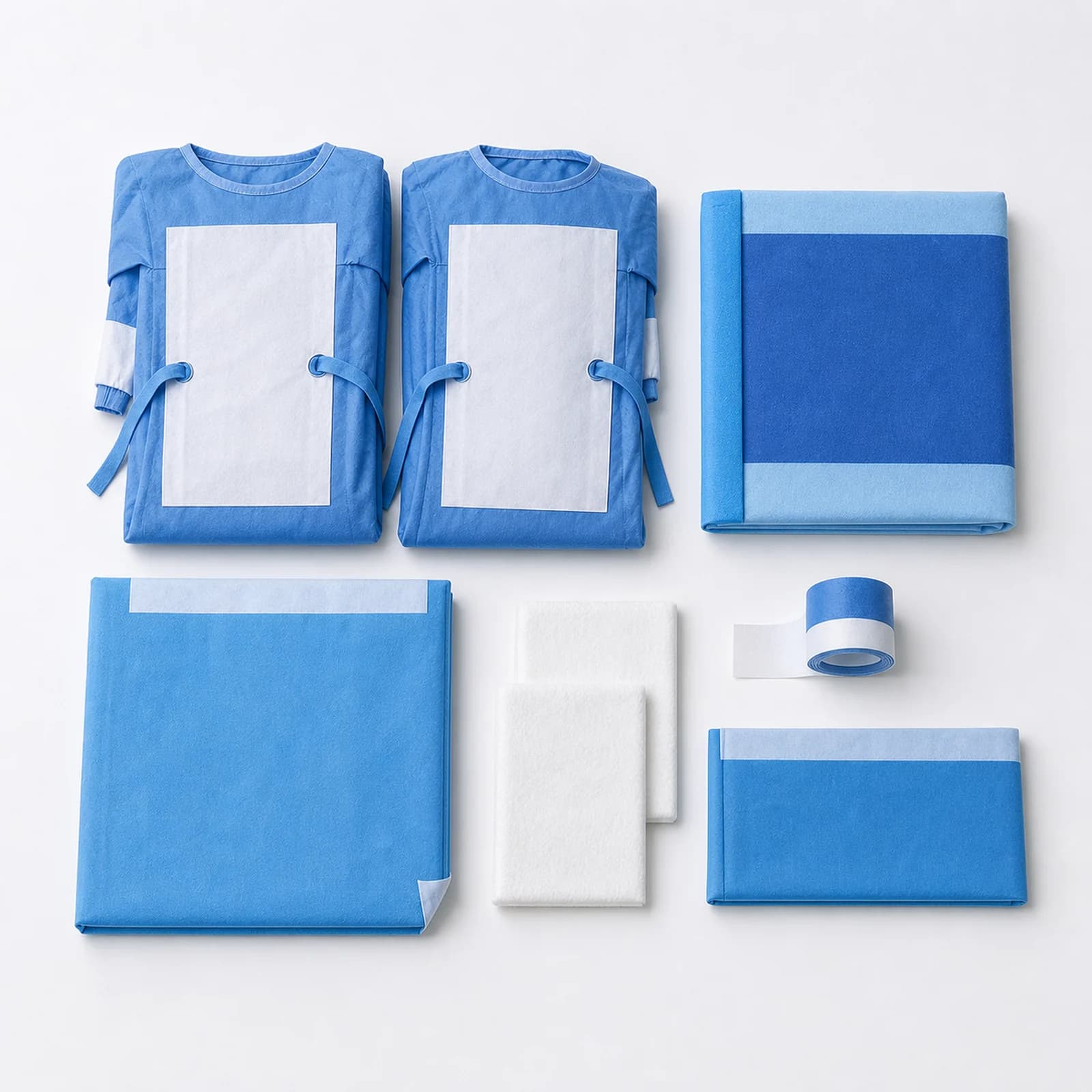
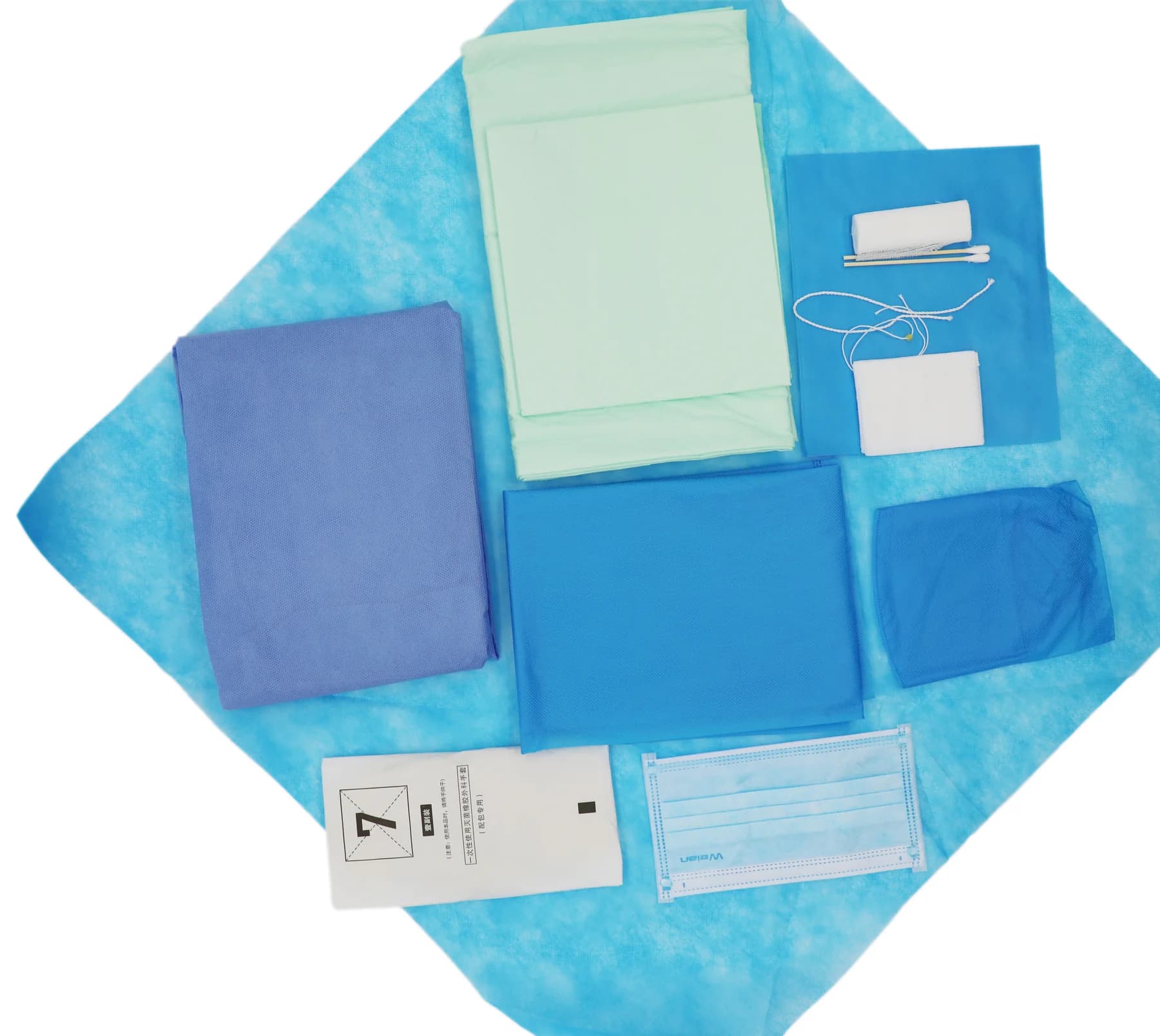
Create one line for every requested component. Useful fields include component name, specification, dimensions and quantity per pack. A list may include a surgical gown, drapes, hand towels, table covers, leggings, tape or other disposable components, but no item should be treated as mandatory for every procedure pack.
Use precise names and avoid relying only on photographs. If a component has a drawing, material requirement or fold configuration that matters to the buyer, attach that information to the corresponding line. Mark optional items separately so they are not accidentally included in the base quotation. This component-level structure becomes the foundation for the bill of materials and sample review.
| Field | Buyer input | Reason for confirmation |
|---|---|---|
| Component name | Clear product or item description | Avoids substituting a visually similar item |
| Specification | Material, construction or reference | Defines the item being quoted |
| Dimensions | Required size and unit | Prevents size assumptions |
| Quantity | Units required per pack | Controls the final pack configuration |
3. Confirm Sizes, Materials and Quantities
The same component name can describe different constructions. Record the dimensions, material, size and quantity per pack for each line. Where a gown is included, specify standard or reinforced construction where applicable and identify the required size, cuff, sleeve, closure and reinforcement details rather than relying on a general gown name.
Technical specifications should be reviewed during quotation and again during sampling. If the buyer has acceptable ranges, tolerances or alternative materials, state them explicitly. If an option is still undecided, label it for confirmation instead of allowing an assumption to enter the quotation. A controlled specification makes later revisions traceable.
4. Review the Pack Configuration
After the component list is agreed in principle, review how the components are organized in the pack. Buyers may consider component arrangement, the expected procedure sequence and how users identify or access items. The goal is to confirm a practical configuration, not to make unsupported claims about operating-room performance.
Ask for a configuration review that identifies every included item and quantity. If changes are requested after a sample review, update the controlled list and revision record. Do not approve the pack by product name or external appearance alone, because those elements may not reveal an omitted component, changed size or different quantity.
5. Confirm Packaging Requirements
Packaging requirements can include the inner packaging format, outer carton, product label, carton mark, barcode where required and buyer-provided artwork. State the quantity per inner pack or carton when that information is part of the purchasing requirement. Packaging feasibility and the information that may appear on labels remain subject to technical and documentation review.
Provide artwork in the requested file format and identify which fields are fixed, variable or market-specific. Ask how revisions will be approved and how the final version will be referenced in the order. Packaging should not be finalized before the product configuration, destination and applicable labeling requirements are understood.
6. Add Private-Label Requirements
A private-label brief may include the brand name, logo, product label, artwork, outer-carton markings, instructions and destination-market information. Keep commercial branding separate from regulated or technical product information so each field can be reviewed by the appropriate party.
The final artwork must be confirmed before mass production. Buyers should check spelling, languages, model references, quantities, addresses, symbols and any variable fields. If the buyer controls the artwork, provide a clear approval contact and version number. Changes after approval may affect feasibility, cost or schedule and should be reviewed before acceptance.
7. Review Target-Market Requirements
Identify the destination country and provide the required registration, labeling, language, import and documentation requirements known to the buyer. Requirements can differ by product, market and intended use, so a document available for one project should not automatically be assumed to cover another.
Future Tech can review what information is available for the selected product and target market, but buyers should not assume that every certification or registration applies to every configuration. Create a document checklist and confirm the legal manufacturer, product scope, model, market and validity of each requested record before ordering.
8. Sample and Pre-production Confirmation
A buyer may review a standard catalog sample, a customized sample or a pre-production sample depending on the project. Availability, preparation time and cost depend on the product and level of customization. The sample request should identify the exact model, revision and fields that must be evaluated.
Compare the sample with the written component list, dimensions, materials, quantities, arrangement, packaging and artwork. Record discrepancies and confirm any correction in the controlled specification. A physical sample does not replace the purchasing file; both should point to the same approved configuration.
9. Final Confirmation Before Production
Before production, confirm the final component list, quantities, dimensions, materials, packaging, artwork, expected order quantity, destination and documentation requirements. Identify the approved revision and the people authorized to accept changes. Resolve open fields rather than leaving them as informal notes.
The quotation, approved sample and production specification should describe the same configuration. If a commercial change affects a component or packaging field, route it back through technical confirmation. This disciplined handoff reduces ambiguity and gives both buyer and manufacturer a shared reference for production and inspection.
What Information Should You Send for a Custom Surgical Pack Quote?
- Procedure and intended use context
- Complete component list
- Specifications, dimensions and materials
- Quantity required for each component per pack
- Expected order quantity
- Inner and outer packaging requirements
- Private-label artwork and carton markings
- Destination market and label languages
- Required product, quality or import documentation
- Reference model, drawing or sample where available
Conclusion
The more complete the specification, the easier it is to prepare an accurate quotation and reduce repeated clarification. Start with the procedure, build the component list, confirm technical fields, then approve packaging and market requirements. Keep every change connected to a controlled revision.
Future Tech’s surgical pack catalog can provide a starting configuration for discussion. Final components, materials, packaging and applicable documentation are confirmed for the selected project before production.