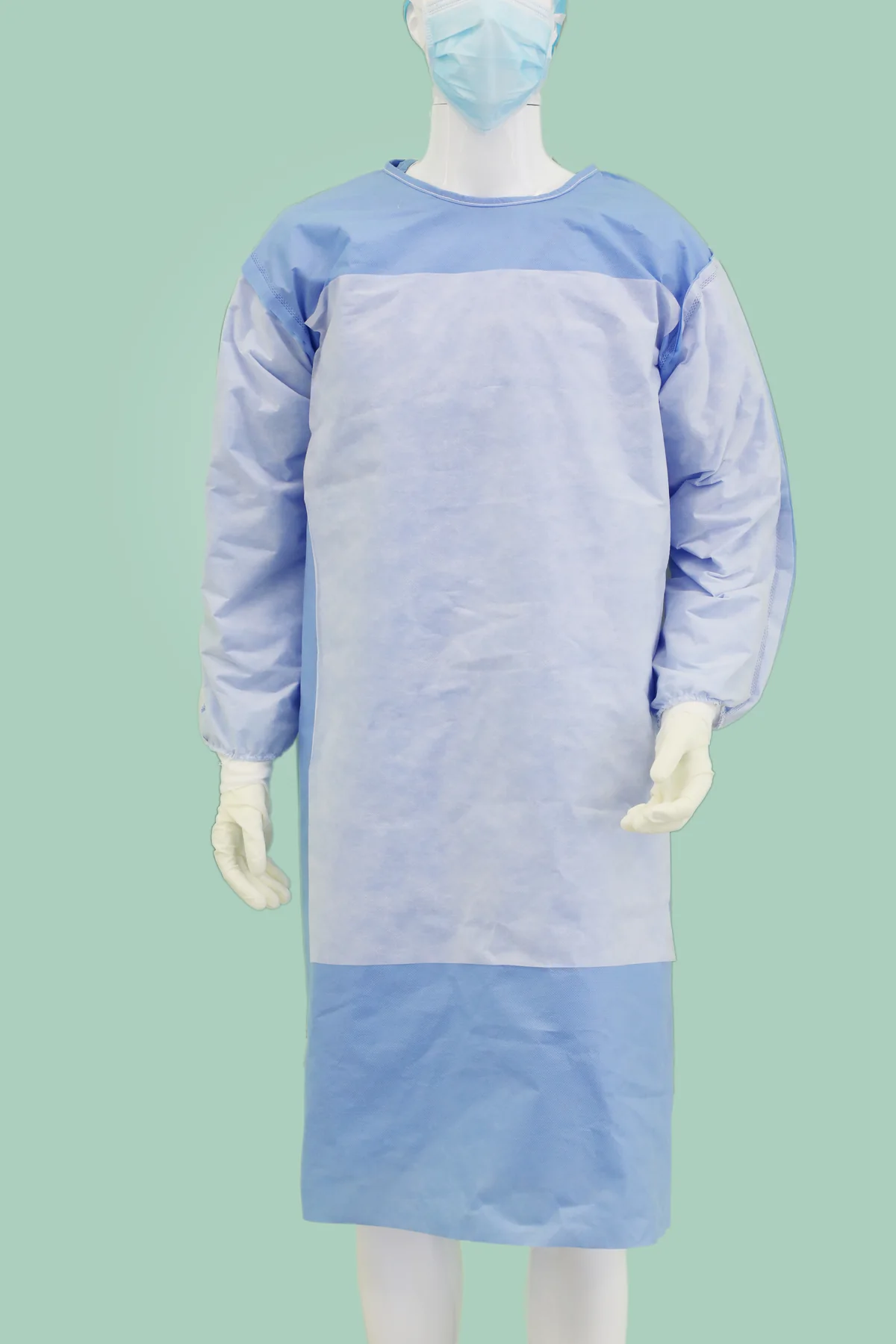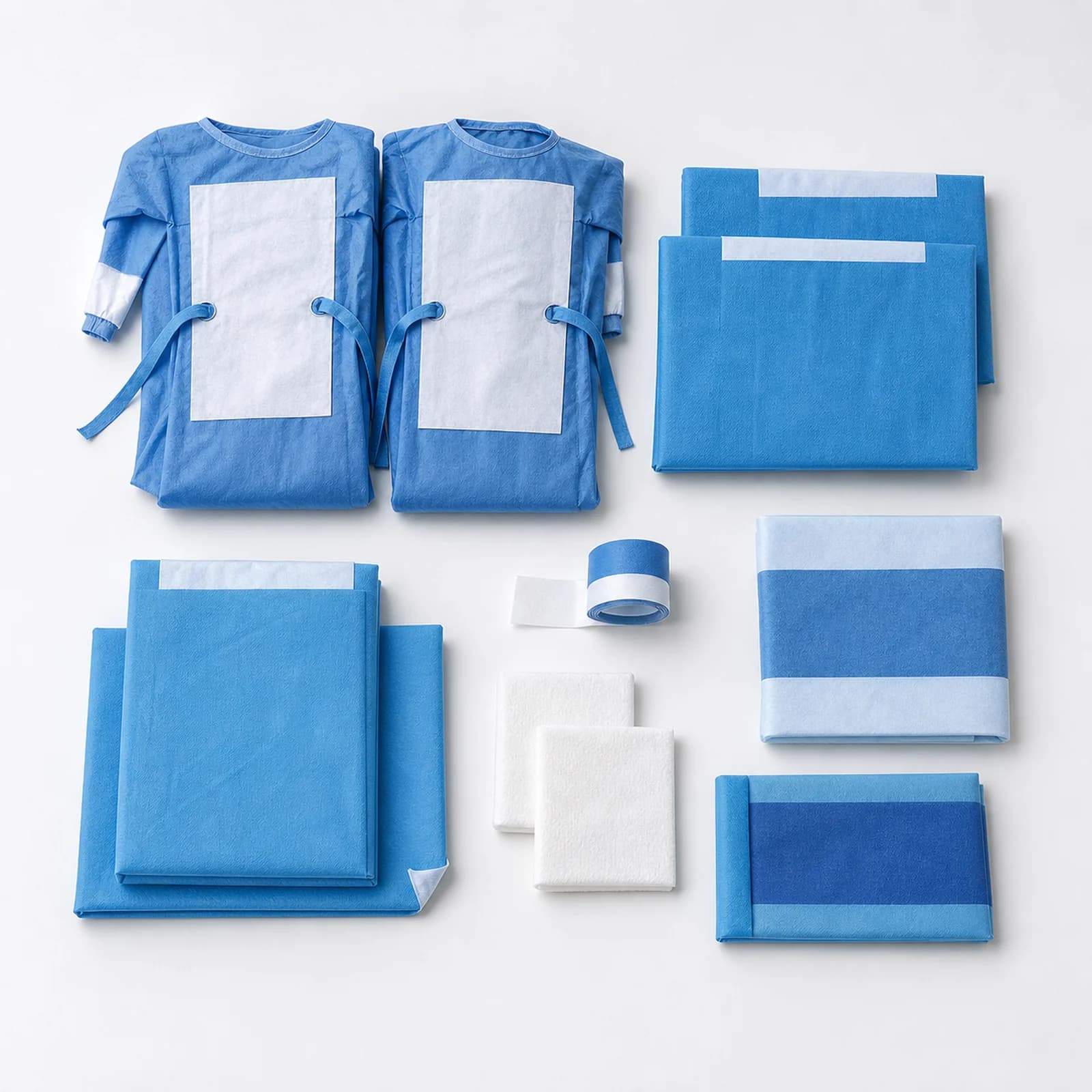
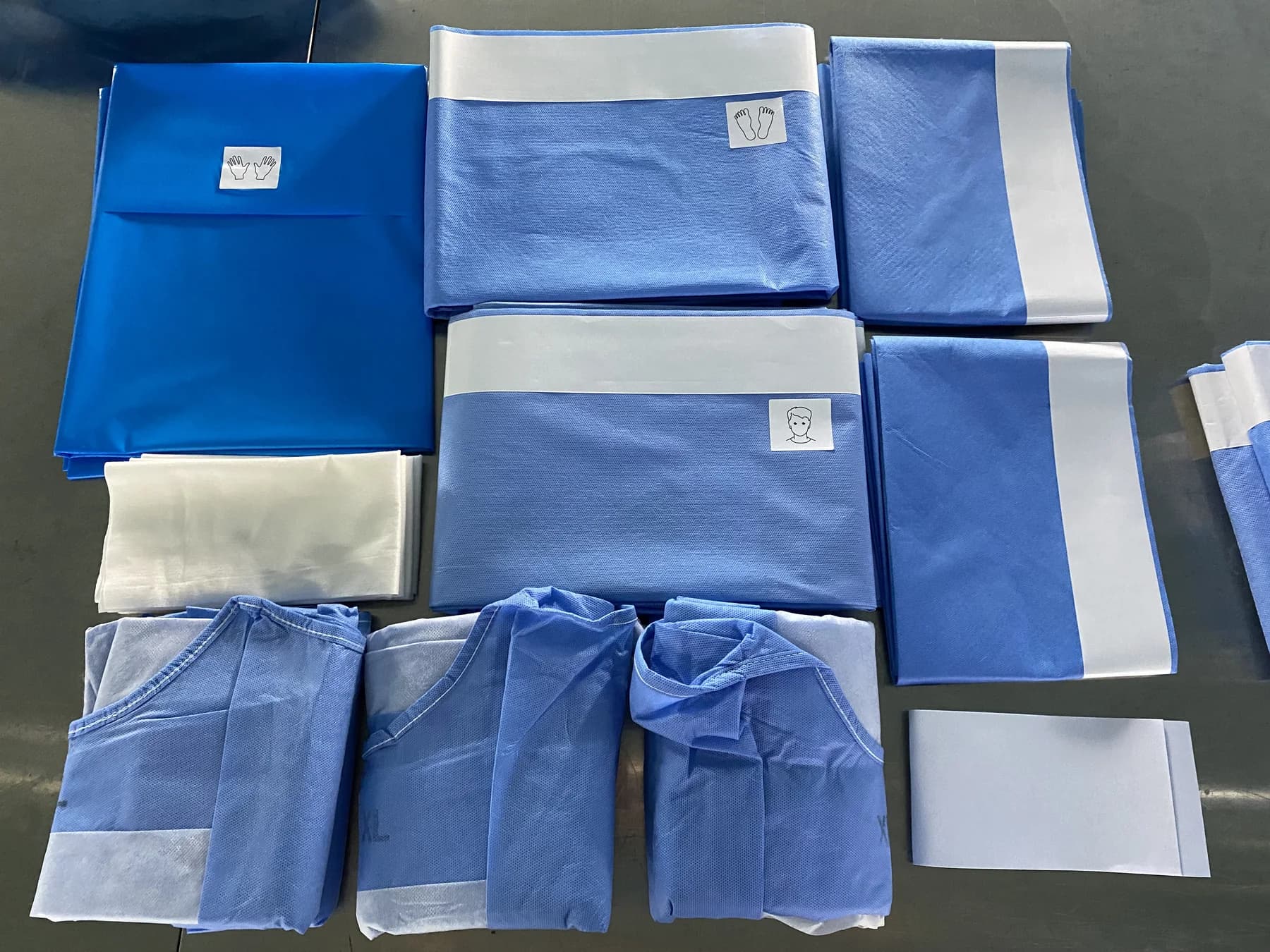
What Is a Custom Surgical Pack?
A custom surgical pack is a defined group of disposable components assembled and packaged according to a confirmed procedure or buyer specification. Depending on the project, the pack may include drapes, gowns, covers, towels and other listed components.
Custom does not mean that every possible component is automatically suitable. The buyer and supplier need an approved bill of materials that identifies each item, specification and quantity.
Procedure-Specific Components
Future Tech’s catalog includes separate pack models such as Universal, Laparoscopy, Delivery, Cardiovascular, Knee Arthroscopy, C-section, Ophthalmology and T.U.R. packs. Their component lists differ because they are organized around distinct catalog configurations.
A buyer can begin with the closest catalog model and then document requested changes. The final configuration should be confirmed before production; product names should not replace a complete component review.
| Configuration field | What the buyer should provide | What should be confirmed |
|---|---|---|
| Components | Required item names and functions | Exact specification for every item |
| Quantity | Number required per pack | Approved bill of materials |
| Packaging | Pack format and labeling needs | Packaging specification and artwork approval |
| Private label | Brand and market requirements | Approved artwork and project documentation |
How Packs May Support OR Preparation
When required disposable components are grouped under a confirmed configuration, teams may reduce the number of separately picked items and create a more repeatable preparation list. The operational result depends on the hospital’s workflow, pack design, storage process and actual use.
No universal time-saving percentage is claimed. Buyers evaluating efficiency should compare their current picking process with a proposed pack through a controlled trial and document any changes in preparation steps, unused items and handling requirements.
Customization, Packaging and Private Label
A practical customization process starts with component selection, moves to configuration confirmation, then packaging and private-label approval. Each stage needs written sign-off so the production version matches the purchasing file.
Importers and distributors should also clarify destination-market labeling, traceability, sterilization documentation where applicable, shelf-life evidence and change-control expectations. These fields remain project-specific and must not be assumed from a catalog image.
Buyer Requirement Checklist
- Procedure and intended pack model
- Complete component list and quantities
- Dimensions, materials and construction for each component
- Packaging and labeling specification
- Private-label artwork and language requirements
- Required regulatory and quality documentation
- Sample approval method
- Order quantity, production plan and change-control process
Choose a Starting Configuration
Review the existing surgical pack catalog and select the nearest procedure-specific model. Then send the required changes as a structured component list for confirmation.